Best Portable Power Station UK 2026: Ranked Buyer's Guide
The best portable power stations to buy in the UK for 2026 — EcoFlow DELTA 2, Anker SOLIX C1000, and Jackery Explorer 1000 v2 compared with current prices.
A portable power station is a large lithium battery with a built-in inverter, charger and UK plug sockets — the plug-and-play alternative to a fixed home battery, at a fraction of the price and with none of the electrician callouts. UK demand has climbed sharply since Storm Éowyn in 2025 exposed how brittle the grid can be during outages, and again in 2026 as the cost-of-living squeeze pushed households toward time-of-use tariff arbitrage and plug-in solar pairing.
This guide ranks the three portable power stations worth buying in the UK in 2026, with current prices, capacity, and the use cases each is actually best for. If you specifically want the deeper plug-in solar pairing analysis, read the companion guide on solar-specific pairing. This piece is the buyer's shortlist.
The three that matter
Cutting to the chase: EcoFlow DELTA 2 is the best portable power station for most UK buyers in 2026 — the LFP chemistry, expandability, mature app, and £599 street price make it hard to beat. Anker SOLIX C1000 Gen 2 wins on surge power for households running high-draw appliances. Jackery Explorer 1000 v2 wins on weight and price if you want a dual-use unit that also goes camping.
The three that matter — full breakdown
EcoFlow DELTA 2 — Best All-Rounder
Price: ~£599 | Capacity: 1,024Wh | Weight: 12kg
The EcoFlow DELTA 2 is the default recommendation for a reason. It hits the sweet spot between capacity, price, and ecosystem integration. LFP (lithium iron phosphate) chemistry gives 3,000+ cycles to 80% capacity — over 8 years of daily use. The EcoFlow app is the most polished of the three, with charge scheduling, output limits, and clear real-time monitoring.
Solar input maxes at 500W via MC4, meaning your 800W system can charge it directly (the DELTA 2's MPPT controller handles the conversion). Alternatively, charge via AC from your ring main during cheap overnight hours if you're on a time-of-use tariff.
Best for: most plug-in solar owners wanting a reliable, well-supported battery at a sensible price. Particularly strong if you're already in the EcoFlow ecosystem with the STREAM kit or 400W panel.
Anker SOLIX C1000 Gen 2 — Best Specs
Price: ~£799 | Capacity: 1,056Wh | Weight: 12.9kg
The Anker SOLIX C1000 Gen 2 is the newest of the three, with marginally more capacity and a more modern design. LFP chemistry with 3,000+ cycle rating. The SurgePad technology allows 2,400W surge output — higher than the DELTA 2 — which matters if you plan to run high-draw appliances briefly (kettles, microwaves).
Anker's app is competent though slightly less refined than EcoFlow's. Solar input maxes at 600W — more headroom than the DELTA 2 if you're running larger panel arrays or planning expansion.
Best for: households wanting the highest capacity and surge power. Worth the premium if you plan to use the battery for occasional off-grid appliance use (power cuts, garden office, workshop) alongside the solar storage role.
Jackery Explorer 1000 v2 — Best Portability
Price: ~£499 | Capacity: 1,070Wh | Weight: 10.8kg
The Jackery Explorer 1000 v2 offers similar capacity to the other two at a lower price and lighter weight. It uses a slightly older NMC lithium-ion chemistry rather than LFP, which means a lower cycle rating (around 1,000 cycles to 80% — roughly 3 years of daily use). Charge rate via solar is limited to 200W, which is slower than the competition.
Best for: owners who want dual-use — a home solar battery that also goes camping, to the allotment, or in the caravan. The lighter weight and carry handle make it genuinely portable. If your primary use is home storage and you won't move it often, the DELTA 2 or C1000 are better value due to their superior cycle life.
Head-to-Head Comparison
| Feature | EcoFlow DELTA 2 | Anker SOLIX C1000 | Jackery 1000 v2 |
|---|---|---|---|
| Price | ~£599 | ~£799 | ~£499 |
| Capacity | 1,024Wh | 1,056Wh | 1,070Wh |
| Chemistry | LFP | LFP | NMC |
| Cycle life | 3,000+ | 3,000+ | ~1,000 |
| AC output | 1,800W (2,700W surge) | 1,500W (2,400W surge) | 1,500W (2,000W surge) |
| Solar input | 500W max | 600W max | 200W max |
| Weight | 12kg | 12.9kg | 10.8kg |
| App quality | Excellent | Good | Basic |
| UK plugs | 2× UK 3-pin | 2× UK 3-pin | 2× UK 3-pin |
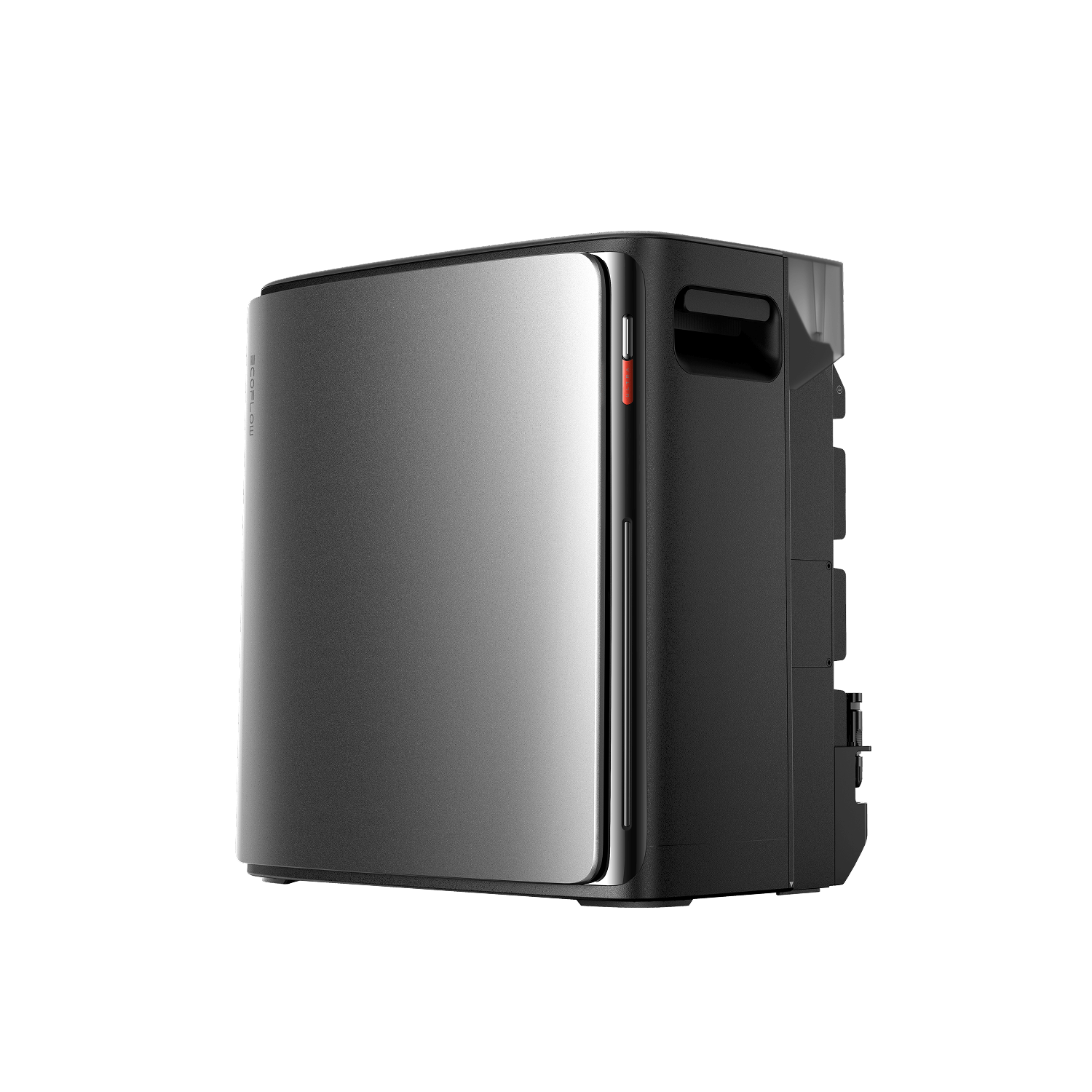
- 800W dual-panel kit with 1kWh Delta battery
- Store daytime solar for evening use
- Full home backup mode
- Smart scheduling via EcoFlow app
The Financial Case for Each
The core calculation is the same for all three: how much surplus solar are you currently exporting unpaid, and how much can the battery capture?
For a household exporting 1-2 kWh per day (typical for an 800W system when residents are out during the day), the annual value of captured electricity is roughly £88-175 at 24p/kWh.
DELTA 2 payback: £599 ÷ £88-175/year = 3.4-6.8 years SOLIX C1000 payback: £799 ÷ £88-175/year = 4.6-9.1 years Jackery 1000 v2 payback: £499 ÷ £88-175/year = 2.9-5.7 years (but NMC degradation means less capacity retained over time)
On a time-of-use tariff, the overnight/daytime price spread adds another £50-80/year, reducing payback across the board.
The Jackery has the shortest pure financial payback but the shortest useful life (NMC chemistry degrades faster). Over a 10-year horizon, the LFP batteries (DELTA 2 and C1000) retain more capacity and deliver more total value.
Can You Expand?
EcoFlow — the DELTA 2 accepts add-on batteries (DELTA 2 Extra Battery) to double capacity. This is useful if your first year of monitoring shows you're exporting more than 1 kWh per day. The expansion battery connects directly to the DELTA 2 without additional inverter hardware.
Anker — the C1000 supports expansion via the SOLIX BP1000 add-on battery, similarly doubling capacity.
Jackery — no direct battery expansion option for the Explorer 1000 v2. To increase capacity, you'd need to buy a second unit (which can't be linked to the first).
Which to Buy
If budget is the primary concern and you want dual-use (home + camping/caravan): Jackery Explorer 1000 v2. Accept the lower cycle life and plan to replace or upgrade in 3-4 years.
If you want the best balance of price, performance, and longevity: EcoFlow DELTA 2. The LFP chemistry, expansion option, and excellent app make it the default recommendation.
If you want the highest capacity and surge power, and budget allows: Anker SOLIX C1000 Gen 2. The better surge rating and newer design justify the premium for power-hungry households.
Before You Buy
Don't buy a battery before you have data. Install your plug-in solar system, fit a Tapo P110 to the inverter output, and monitor for at least one month — ideally a full season. This tells you:
- How much you generate daily
- How much you self-consume vs export
- Whether your consumption pattern makes battery storage financially worthwhile
For tariff optimisation to maximise battery value, see our best energy tariff guide. For the full financial analysis, see our battery vs no battery guide. To browse the current UK stock, check Amazon UK's portable power station category.
What is the best portable power station to buy in the UK in 2026?
For most UK buyers, the EcoFlow DELTA 2 at £599 is the best portable power station in 2026 — LFP chemistry with 3,000+ cycle life, expandable capacity, mature app, and 1,800W AC output. Anker SOLIX C1000 Gen 2 (£799) has better surge power for kettles and microwaves. Jackery Explorer 1000 v2 (~£499) is the lightest and cheapest but uses shorter-lived NMC chemistry.
How much does a good portable power station cost in the UK?
Expect £499–£799 for a quality 1 kWh unit in the UK. Below £400 you are typically getting older NMC chemistry with poor cycle life or an unknown brand with no realistic warranty. Above £900 you are into 2 kWh+ territory or premium ecosystem premiums.
Can I use a portable power station with plug-in solar?
Yes. Most portable power stations accept solar input via MC4 connectors. The EcoFlow DELTA 2 handles up to 500W, Anker SOLIX C1000 up to 600W, and Jackery Explorer 1000 v2 up to 200W. See the dedicated plug-in solar pairing guide for the fuller integration story, including the no-battery-in-plug-circuit rule under SI 2026/848.
Related reading
See how much plug-in solar could save you — with real data for your postcode.