Pre-BSI Plug-in Solar: Need Upgrade?
Already installed plug-in solar before the BSI standard? Here's what changes in July 2026 and whether you need to act.
The UK's plug-in solar regulations became legal in principle with BS 7671 Amendment 4 in April 2026, but the BSI product standard that defines exactly what a compliant kit looks like isn't expected until July 2026. For the thousands of UK owners who installed systems before that date — either under the previous grey-area arrangement or in the window between the wiring standard and product standard — the obvious question is: does the new standard make my kit non-compliant?
The short answer: almost certainly not. Here's the longer version.
What the Product Standard Does
BS 7671 Amendment 4 defines the installation requirements: the circuit type, the RCD type, the G98 notification process, and the electrical rules for connecting a plug-in solar system to a UK home. This is the wiring standard — it covers how the system is connected, not what the system itself looks like.
The BSI product standard (expected July 2026) is separate. It defines what a compliant product must look like: safety certifications, marking, inverter specifications, and connector standards. This is the standard that manufacturers must meet to sell compliant kits through UK retailers.
Think of it this way: BS 7671 tells you how to wire the socket; the product standard tells you what can be plugged into it.
What UKCA Marking Means for Existing Kits
Post-Brexit, UK product conformity is shown by the UKCA mark rather than the CE mark used in Europe. European CE-marked products (including all current German Balkonkraftwerk kits, Hoymiles inverters, EcoFlow STREAM, Anker SOLIX) are not automatically accepted under UKCA.
When the BSI product standard publishes in July 2026, manufacturers will need to produce a UKCA-compliant version of their products to sell through UK retail channels. Kits already in the UK market that carry CE marking are in a transitional period — they can continue to be sold and used legally under the existing transition arrangements.
Critically: installing a CE-marked kit before the product standard is not illegal. The regulatory position throughout 2026 has been that plug-in solar systems meeting the European standards (specifically the DIN VDE V 0126-95 standard used in Germany) are acceptable pending the UK's own standard, provided the wiring installation meets BS 7671.
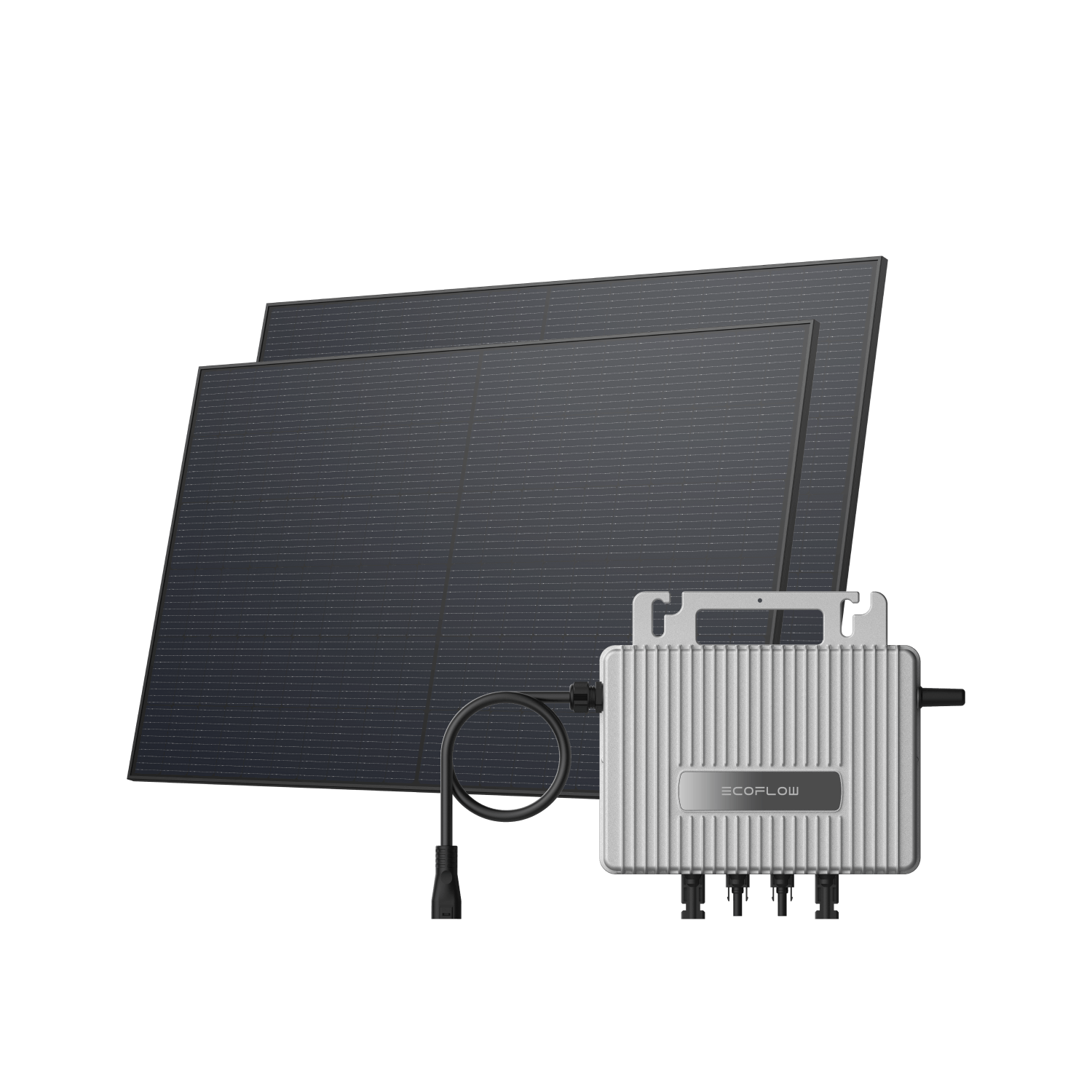
- 800W dual-panel balcony or garden kit
- 600Wh plug-in battery included
- App with live monitoring & smart scheduling
- Balcony, garden & flat-roof mount options
Do You Need to Replace Your Kit?
No. There is no retrospective compliance requirement. The product standard applies to products sold after the date it comes into force, not to existing installations. Your EcoFlow STREAM, Hoymiles-based kit, or any other CE-marked system you've installed will not become "illegal" when the product standard publishes.
This mirrors the approach taken in Germany when they updated their own standards in 2024: existing installations were explicitly grandfathered. UK policy is expected to take the same approach.
What Does Change After July 2026
What the retailers will sell — from July 2026, retailers selling into the UK market (Lidl, B&Q, online retailers) will need UKCA-compliant kits. This means dedicated UK versions of existing products, with UK-specific safety markings, UK-standard connectors (though MC4 is universal), and documentation meeting UK requirements.
New kits will be distinguishable from European versions — European kits have Schuko plugs (the German/European round-pin socket), UK versions will have UK 13A plugs. If you're buying after July 2026, buy a kit specifically labelled for UK sale with a UK plug.
Insurance considerations — some home insurers have started requiring that installed solar systems meet relevant UK product standards. After July 2026, a UKCA-marked kit will be the clearest evidence of compliance. If you installed a CE-marked kit before July 2026, document your installation (G98 notification, BS 7671 compliance, professional installation if applicable) as evidence that your installation met the best available standards at the time.
The Practical Risk for Early Adopters
The main risk for early adopters isn't legal compliance — it's insurance. Some insurers, when assessing a claim, may question whether a CE-marked kit installed before the product standard was a compliant installation. The defence is straightforward: you installed a system meeting German/European standards that were explicitly referenced by UK regulators as acceptable during the transition, and your wiring installation complies with BS 7671.
Keep records:
- Your G98 notification acknowledgement from your DNO
- The kit's CE certification documentation (downloadable from the manufacturer's website)
- Any electrician sign-off on the wiring installation
- Correspondence with your insurer confirming the installation
This paperwork takes 30 minutes to gather and is worth having.
What to Watch For in July 2026
When the BSI product standard publishes, watch for:
Connector requirements — the UK standard may specify a particular socket type or connector configuration. This is unlikely to require changes to existing panel-to-inverter (MC4) connections but may affect how the inverter connects to the house socket.
Inverter safety requirements — any additional safety features required by the UK standard. Most modern micro-inverters (Hoymiles, APsystems, Enphase) already exceed minimum safety requirements, so this is unlikely to affect existing installations.
Grid frequency response requirements — UK grid runs at 50Hz with specific tolerance parameters. European inverters are already designed for 50Hz grids, so no compatibility issues expected.
We'll publish a full update when the BSI standard publishes. Follow the pluggedin.solar blog or check back in July 2026.
For now, the best action for existing owners is to ensure your installation paperwork is in order and notify your home insurer. For guidance on the notification process, see our insurance guide and G98 guide.
Related reading
See how much plug-in solar could save you — with real data for your postcode.