EcoFlow STREAM vs STREAM Ultra: Which?
Head-to-head comparison of EcoFlow's STREAM 800W and STREAM Ultra. Battery or no battery? Here's how to decide for your situation.
EcoFlow makes the two most talked-about plug-in solar kits in the UK. The EcoFlow STREAM 800W is the straightforward generation-only system. The EcoFlow STREAM Ultra adds integrated battery storage, letting you store daytime solar for evening use.
Both use the same panels. Both connect to the EcoFlow app. But the price difference is significant, and the right choice depends entirely on how you live. Here is the honest comparison.
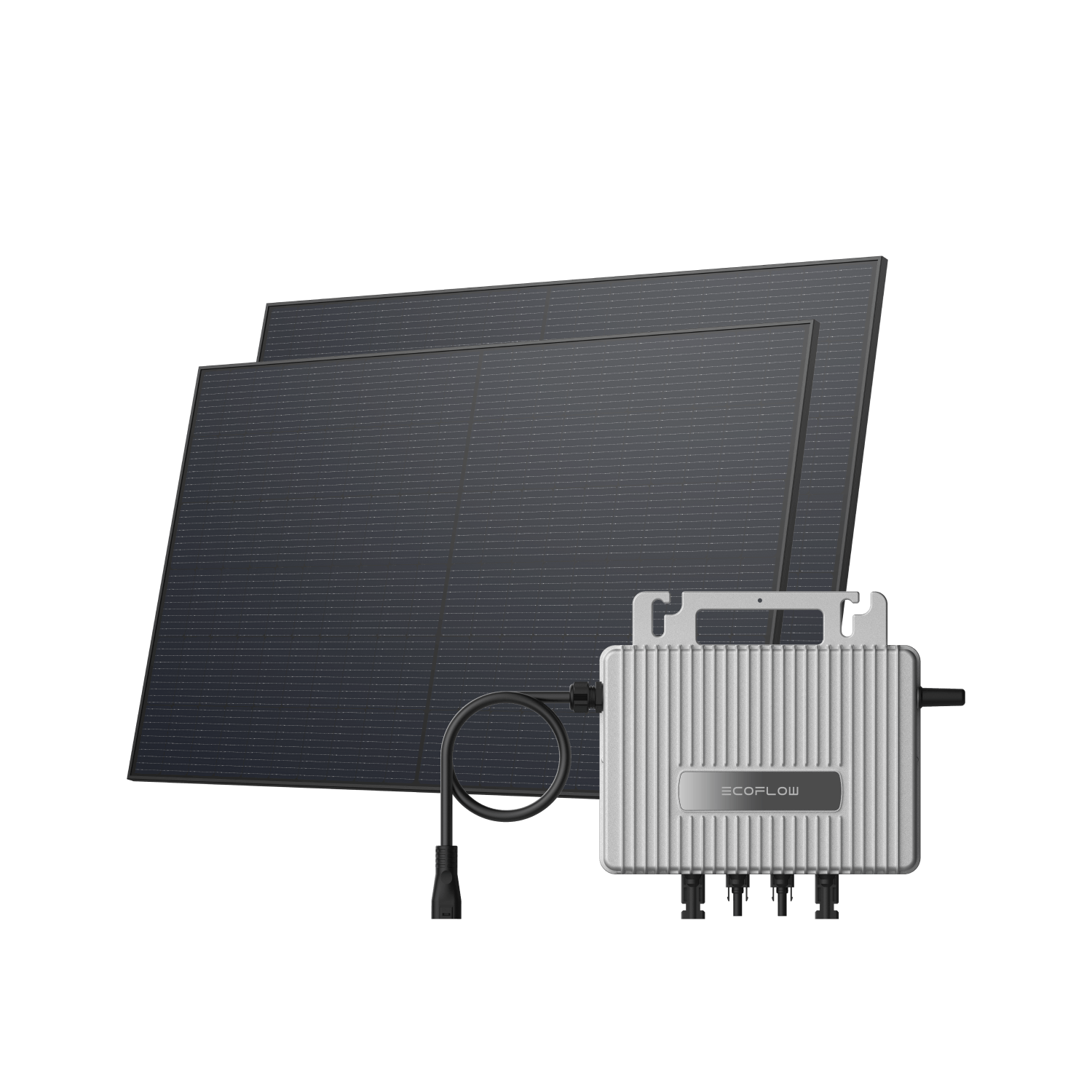
- 800W dual-panel balcony or garden kit
- App with live monitoring & smart scheduling
- Balcony, garden & flat-roof mount options
- Government-backed for UK plug-in solar
Specs at a Glance
| Feature | STREAM 800W | STREAM Ultra |
|---|---|---|
| Solar panels | 2 x 400W | 2 x 400W |
| Inverter output | 800W | 800W |
| Battery | None | Integrated (1-2 kWh) |
| App monitoring | Yes | Yes |
| Smart scheduling | Basic | Advanced (charge/discharge) |
| Price (approx.) | £499 | £899-1,099 |
| Mount options | Balcony, garden, flat roof | Balcony, garden, flat roof |
| Annual generation | ~750-850 kWh | ~750-850 kWh |
Both systems use the same two 400W monocrystalline panels and the same 800W micro-inverter. The generation potential is identical. The difference is what happens to that electricity after it is generated.
How They Differ: The Battery Question
The STREAM 800W feeds all generated electricity directly into your home circuit. If an appliance is running, the solar electricity powers it. If nothing is running, the electricity flows back to the grid — and under most standard tariffs, you get nothing for it.
The STREAM Ultra adds a battery between the panels and your home. The system works like this:
- Solar panels generate electricity
- The battery charges first
- Once the battery is full, excess generation feeds your home circuit
- In the evening, when the sun goes down, the battery discharges into your home circuit
This means you can use your solar electricity in the evening, when electricity demand (and cost) is highest.
When the Battery Matters
The battery makes a significant difference if:
You are out during the day. If you leave for work at 8am and return at 6pm, most of your solar generation happens while nobody is home. Without a battery, 60-80% of your generation goes to the grid for free. With a battery, you capture that energy and use it in the evening.
Your evening consumption is high. Cooking, entertainment, lighting — the 5-10pm window is when UK households use the most electricity. A 1-2 kWh battery bridges the gap between afternoon generation and evening consumption.
You are on a time-of-use tariff. Tariffs like Octopus Agile charge more during peak hours (4-7pm). Using stored solar during these hours instead of expensive grid electricity maximises your savings.
You want to minimise export. If you have no export tariff and do not want to give away free electricity, the battery captures what would otherwise be lost.
When the Battery Does Not Matter
Save your money on the battery if:
You work from home. If you are home during the day, you are already consuming most of your solar generation as it is produced. A home office with a computer, monitor, and peripherals uses 100-300W continuously — that is a significant chunk of your solar output. Add a washing machine cycle at midday and you are self-consuming 60-70% without a battery.
You are retired or home most days. Same logic. If you are around during peak generation hours, you naturally self-consume more.
You are a keen load-shifter. If you are happy to run the dishwasher at 1pm, do laundry at midday, and charge devices during the day, you can push self-consumption to 60-70% without a battery.
Budget is tight. The STREAM 800W at £499 pays for itself in 2-3 years. The Ultra at £899-1,099 takes 3-5 years. If budget is the priority, the basic STREAM delivers better return on investment.
The Price-Per-kWh Comparison
This is where the maths gets interesting.
STREAM 800W (£499):
- Annual generation: ~800 kWh
- Self-consumption without battery (load-shifting): ~60% = 480 kWh
- Annual savings at 30p/kWh: ~£144
- Payback period: 3.5 years
STREAM Ultra (£999 midpoint):
- Annual generation: ~800 kWh (same panels)
- Self-consumption with battery: ~85% = 680 kWh
- Annual savings at 30p/kWh: ~£204
- Payback period: 4.9 years
The Ultra saves you an extra £60 per year but costs £500 more. That extra £500 takes roughly 8 years to pay back on its own. Battery life is typically 10-15 years (6,000+ cycles), so you will eventually come out ahead — but the return on investment is slower.
The calculus changes if:
- Electricity prices rise (payback shortens)
- You have a time-of-use tariff with expensive peak rates (higher savings from battery discharge during peaks)
- You have zero export payments (battery captures what would be completely lost)
App and Smart Features
Both systems use the EcoFlow app, but the Ultra unlocks more features:
STREAM 800W app features:
- Real-time generation monitoring
- Daily, weekly, and monthly generation history
- Weather forecast integration
- Basic energy insights
STREAM Ultra app features (in addition to above):
- Battery state of charge monitoring
- Smart charge/discharge scheduling
- Peak shaving mode (discharge during expensive hours)
- Floor price setting (only charge battery when generation exceeds a threshold)
- Export management (prioritise battery charge over grid export)
The Ultra's app features are genuinely useful. The ability to set a discharge schedule that matches your evening routine means the battery drains at exactly the right time, maximising the value of every stored kilowatt-hour.
Installation Differences
Both kits mount identically — same panels, same brackets, same options for balcony rail, garden ground mount, or flat roof ballast mount.
The difference is the battery unit:
- STREAM 800W: The micro-inverter is compact and mounts directly behind the panels or on a nearby wall. Minimal indoor footprint.
- STREAM Ultra: The battery unit is larger and needs to be positioned indoors or in a weatherproof outdoor location. It is roughly the size of a small suitcase and weighs 15-25 kg depending on capacity.
The battery unit connects between the micro-inverter and your home circuit. If you are hardwiring (the current compliant route), your electrician needs to accommodate it. If you are using plug-and-play (once legal), it sits between the inverter output and the wall socket.
Important note on the interim product specification: The UK interim product specification currently excludes battery storage from plug-and-play systems. This means the STREAM Ultra's battery cannot be used in a simple plug-in configuration under the initial rules. You would need an electrician to install the battery element separately. This may change when the full BSI product standard publishes.
Build Quality and Warranty
Both systems carry EcoFlow's standard warranty:
- Panels: 25-year performance warranty (minimum 80% output at 25 years)
- Inverter: 12-year warranty
- Battery (Ultra only): 10-year or 6,000-cycle warranty
EcoFlow has a solid track record in portable power and has been manufacturing solar products since 2017. Their UK support infrastructure has expanded significantly since becoming the government's official plug-in solar partner.
Our Verdict
For most people: the STREAM 800W is the better buy.
At £499, it is affordable, straightforward, and pays for itself in under 4 years. If you can shift even some of your daytime loads, you will self-consume enough solar to make the numbers work comfortably.
The STREAM Ultra makes sense if:
- You are out all day and cannot load-shift
- You want to maximise self-consumption above 80%
- You are on a time-of-use tariff with expensive peak rates
- You are prepared to accept a longer payback period for greater long-term savings
The bottom line: Do not buy the Ultra purely on the assumption that "battery = better." For a home-worker or retiree who is around during the day, the basic STREAM is £500 cheaper and delivers 70% of the savings. Start with the STREAM. If after six months you find you are exporting too much, you can always add battery storage later.
For a full review of the STREAM system, see our EcoFlow STREAM review. For a broader comparison of all available kits, see our best plug-in solar kits roundup.
Looking at how the STREAM stacks up against other brands? Our battery vs no-battery guide covers the wider question beyond just EcoFlow.
Related reading
See how much plug-in solar could save you — with real data for your postcode.